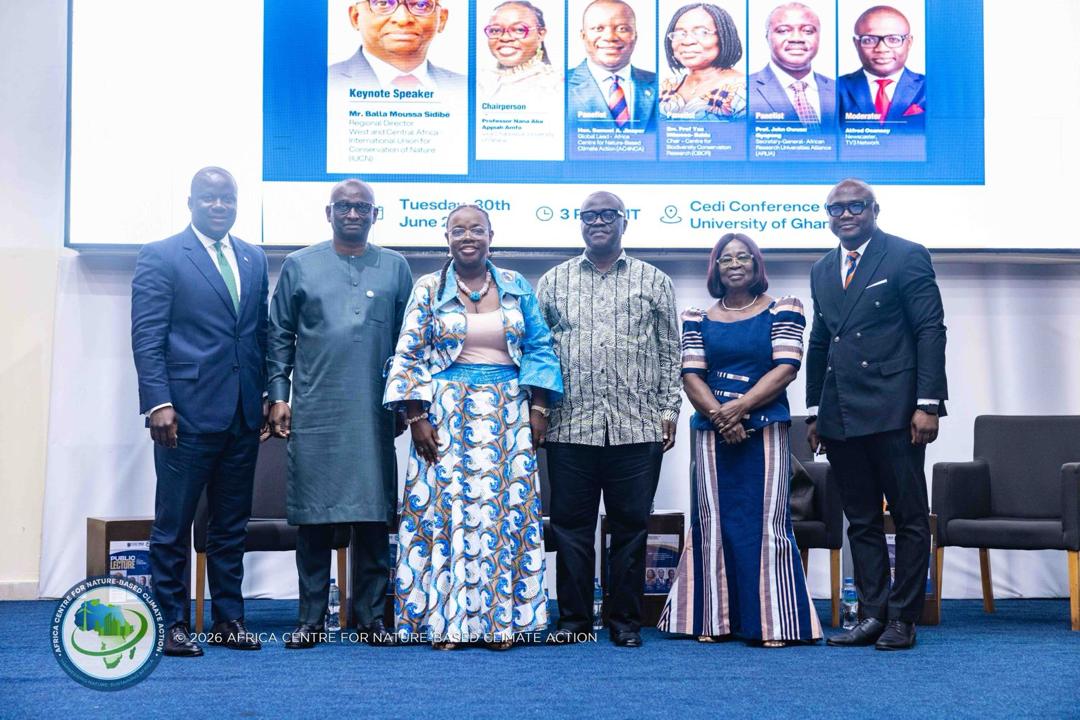
The Africa Centre for Nature-Based Climate Action (AC4NCA), in partnership with the University of Ghana, has held a high-level public lecture as part of the 2026 Scientific Day of Renaissance for Africa (DSRA), bringing together policymakers, academics, researchers, development practitioners, and environmental experts to discuss pathways for scaling nature-based solutions (NbS) across Africa.
Held under the auspices of the Vice-Chancellor of the University of Ghana, Prof. Nana Aba Appiah Amfo, the event provided a platform for dialogue on the role of science, biodiversity conservation, climate resilience, and innovative financing in advancing Africa’s sustainable development agenda.
The lecture, themed “Can Nature-Based Solutions Deliver Climate Resilience, Jobs, Equity and Justice?”, explored how Africa can harness its natural capital to address climate challenges while creating economic opportunities and strengthening community resilience.
Delivering the keynote address, the Regional Director for West and Central Africa of the International Union for Conservation of Nature (IUCN), Mr. Balla Moussa Sidibé, stressed that Africa’s future would depend on protecting and restoring nature rather than exploiting it for short-term economic gains.
He noted that climate change had become one of the continent’s most significant development challenges, affecting agriculture, food security, water resources, livelihoods, and economic growth.
Mr. Sidibé explained that forests, wetlands, mangroves, and healthy soils represent critical natural assets which, when properly managed, can reduce climate risks, enhance food security, protect biodiversity, and create sustainable employment opportunities.
He highlighted the Congo Basin as one of the world’s most important ecosystems, emphasizing that its protection is crucial not only for Africa but also for the global community due to its role in carbon storage, biodiversity conservation, and rainfall regulation.
He therefore called for increased investment in ecosystem restoration, sustainable agriculture, ecotourism, and other green sectors, particularly as Africa seeks to create jobs and opportunities for its growing youth population.
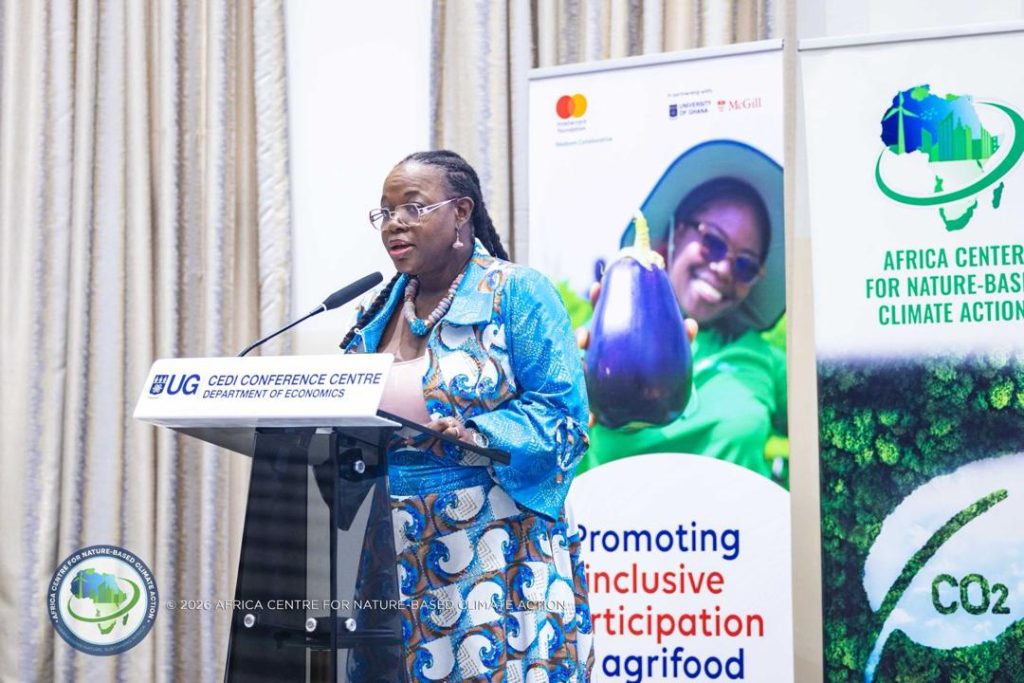
The Vice-Chancellor (VC) of UG, Professor Nana Aba Appiah Amfo said the university is focusing on interdisciplinary research that delivers practical solutions to society’s most pressing challenges.
“UG is committed to impactful interdisciplinary research. Our strategy emphasises knowledge democratisation, open science, strong partnerships, and research that is both globally excellent and locally relevant,” she stated.
The event also featured a high-level panel discussion which brought together leading experts to examine the financing, policy, research, and governance frameworks required to accelerate NbS implementation across the continent.
Speaking during the panel, the Member of Parliament for Damongo and Global Lead for AC4NCA, Hon. Samuel A. Jinapor, called on African governments and development partners to move beyond traditional climate financing approaches and adopt innovative financial mechanisms to unlock the potential of nature-based solutions.
He stressed that while Africa possesses enormous natural capital, realizing its full potential would require greater investment through diversified financing instruments, including carbon markets, blended finance, private sector investment, green bonds, and other sustainable financing mechanisms.
“Africa must move beyond relying solely on traditional sources of climate finance. To unlock the full potential of Nature-Based Solutions, we need to explore innovative and diversified financing mechanisms capable of mobilizing the scale of resources required,” Hon. Jinapor said.
Drawing on Ghana’s experience, he highlighted initiatives such as Green Ghana Day, the country’s REDD+ programme, forest landscape restoration efforts, and participation in emerging carbon markets as examples of how nature-based solutions can restore degraded ecosystems, create green jobs, strengthen livelihoods, and generate new economic opportunities.

Hon. Jinapor emphasized that Africa’s forests, wetlands, mangroves, savannahs, and biodiversity should no longer be viewed only as environmental resources but as strategic economic assets capable of supporting long-term development.
He further called for stronger policy frameworks that integrate nature-based solutions into national development strategies rather than treating them as stand-alone environmental interventions.
According to him, governments must establish enabling regulatory environments that encourage investment while safeguarding ecosystems and ensuring that local communities remain central to conservation efforts through equitable benefit-sharing and sustainable livelihood opportunities.
Beyond financing and policy reforms, Hon. Jinapor highlighted the importance of collaboration among governments, academia, civil society, development partners, Indigenous Peoples, local communities, and the private sector.
“Scaling up Nature-Based Solutions cannot be achieved by governments alone. It requires stronger cross-sector collaboration among governments, academia, the private sector, civil society, development partners, and local communities,” he stated.
The panel also featured renowned conservation scientist Emerita Prof. Yaa Ntiamoa-Baidu and public health expert Prof. John Gyapong, whose contributions highlighted the importance of biodiversity conservation, scientific research, and strengthening African knowledge systems in advancing sustainable development.
The discussions emphasized that while evidence supporting nature-based solutions has grown significantly, the continent’s priority must now shift from demonstrating their effectiveness to scaling implementation with speed, integrity, and measurable impact.
Participants called for greater investment in research, innovation, and locally generated evidence to support policymaking, improve monitoring systems, and ensure that nature-based interventions deliver meaningful benefits for communities and ecosystems.
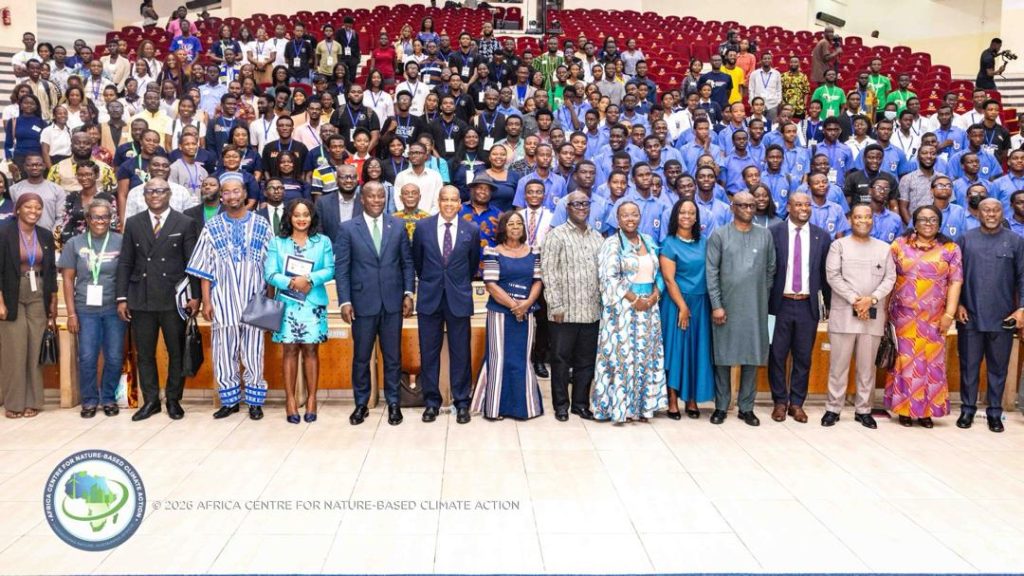
The public lecture concluded with a renewed commitment to strengthening partnerships and accelerating action to transform nature-based solutions from successful pilot initiatives into large-scale programmes capable of delivering climate resilience, biodiversity conservation, green jobs, and inclusive economic growth across Africa.
The event formed part of activities marking the 2026 Day of Scientific Renaissance of Africa (DSRA), an African Union-recognised observance dedicated to promoting science, technology, research, and innovation as drivers of Africa’s sustainable development and socio-economic transformation.


