
The University of Ghana has signalled strong interest in a new strategic partnership with the Africa Centre for Nature-Based Climate Action (AC4NCA), as both institutions look to deepen collaboration on climate research, policy advocacy and public engagement.
The move follows a high-level courtesy visit by AC4NCA’s Board and management to the Vice Chancellor of the University of Ghana, Professor Nana Aba Appiah Amfo, at the University’s campus on Monday.
At the heart of the discussions was a shared ambition to position nature-based solutions as a central pillar of Ghana and Africa’s development, rather than as a secondary environmental concern.
Professor Amfo welcomed the engagement, describing it as timely and well aligned with the University’s strategic direction.
“The University of Ghana is keen on partnerships that extend beyond academia and speak directly to national and continental priorities,” she said. “Climate change, sustainability and resilience are areas where universities must work closely with civil society and policy actors to generate impact.”
She noted that the collaboration reflects the University’s commitment to research excellence, knowledge transfer and policy relevance, adding that climate action remains a critical focus across its faculties and research centres.

The Vice Chancellor also received a goodwill message from the AC4NCA delegation on her recent appointment as Chair of the Council of the Association of Commonwealth Universities, a role that places her at the helm of one of the world’s most influential higher education networks. The delegation described the appointment as a milestone for Ghana and Africa.
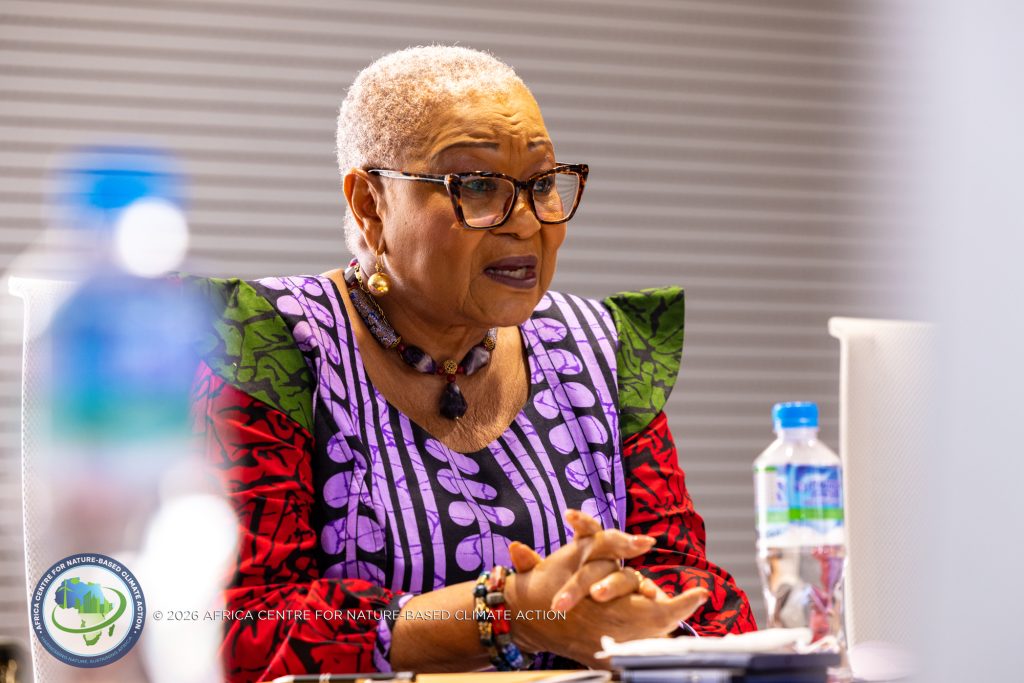
Rev. Dr. Joyce R. Aryee, Board Chair of AC4NCA, outlined the Centre’s vision and mandate, which focuses on promoting nature-based solutions through research, ecosystem restoration, environmental education and evidence-based policy advocacy.
“Nature-based solutions are no longer optional,” she said. “They are essential development tools that can restore degraded ecosystems, protect biodiversity and create sustainable livelihoods, especially for vulnerable communities.”
She explained that AC4NCA’s work spans ecosystem restoration, wetlands protection, sustainable forestry and landscape-level climate interventions, with a strong pan-African outlook supported by a diverse and experienced Board.
A key proposal emerging from the meeting was the organization of a High-Level Public Lecture on Nature-Based Solutions, to be jointly hosted by the University of Ghana and AC4NCA. The lecture is expected to convene global and African leaders in climate policy, conservation and development to interrogate how nature-based solutions can be integrated into national planning, infrastructure investment and climate finance frameworks.
According to AC4NCA Board Member Mr. Kwaku Sakyi-Addo, the lecture aims to “reframe nature-based solutions as critical development infrastructure,” while also examining governance and financing pathways for scaling up impact across Africa.
The list of proposed speakers discussed during the meeting included high-profile global figures with strong credentials in climate diplomacy and conservation leadership.
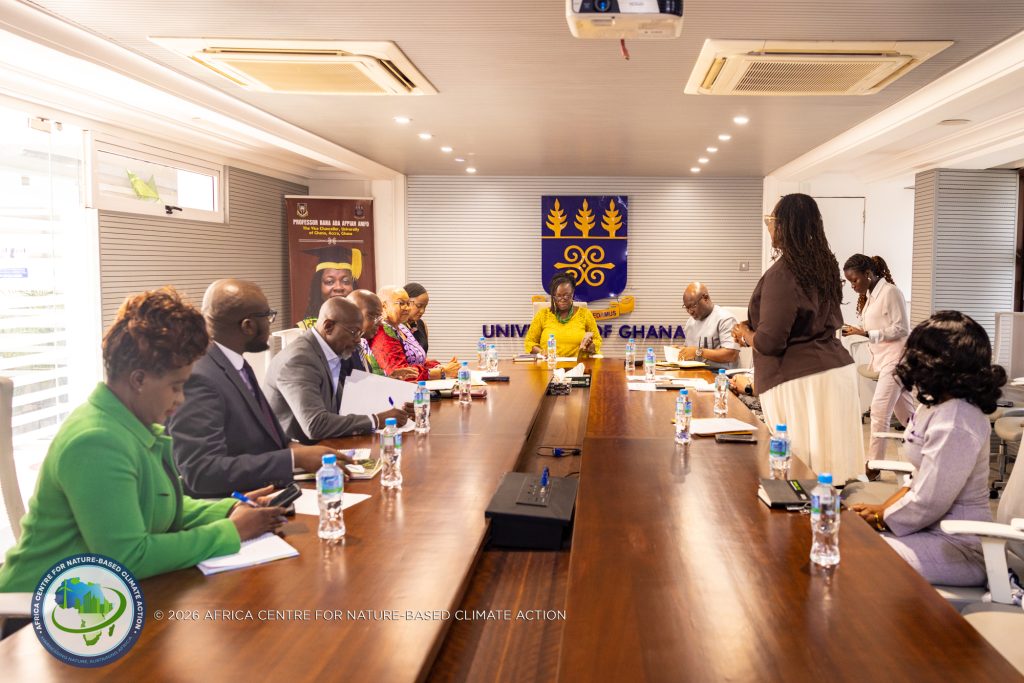
Professor Gordon Awandare, Pro Vice Chancellor of the University of Ghana, reaffirmed the institution’s readiness to explore concrete partnerships with AC4NCA, particularly in research and policy-oriented initiatives.
“Climate research and sustainability are core pillars of the University of Ghana’s strategic plan,” he said. “We are actively building collaborations that strengthen climate resilience, especially for vulnerable populations, and this engagement fits squarely within that agenda.”
Prof Awandare highlighted the University’s ongoing work under the Collaborative on Climate Resilience and Sustainability (UG-CCReS), supported by the Mastercard Foundation, which focuses on research, policy dialogue and inclusion, particularly for young women and persons with disabilities.
As climate impacts intensify across Ghana and the wider continent, the proposed partnership reflects a growing recognition that universities and civil society must work hand in hand to shape policy, influence public discourse and deliver solutions rooted in nature, science and local realities.


